When Fashion Plates Became Personal References
Fashion plates as personal references can help you borrow a silhouette, colour or mood without copying an entire outfit or losing your own style.
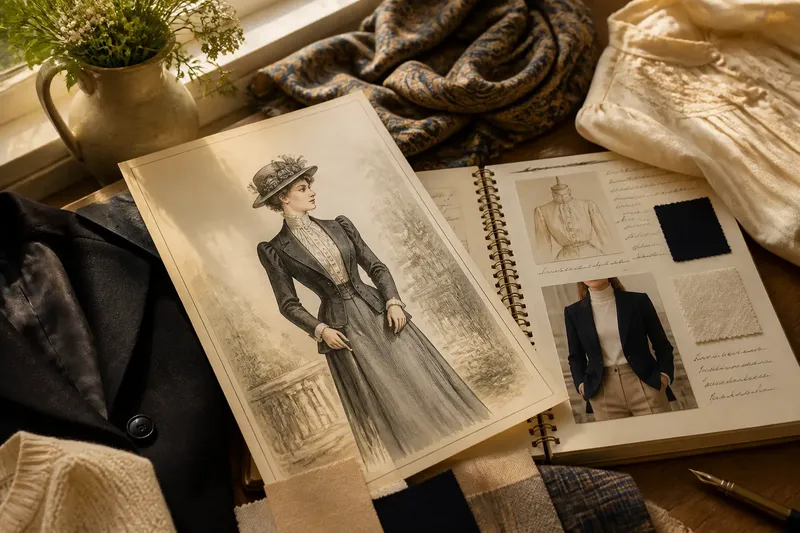
The most common mistake with a fashion plate is to treat the whole outfit as an instruction: copy the dress, pose and sense of occasion, then wonder why it feels like a costume. A fashion plate can instead serve as a personal reference: one detail, mood or visual idea to consider alongside the clothes you already wear.
Printed images of clothing appeared in forms including hand-coloured illustrations, magazine pictures and photographs. Their purposes and audiences varied, so it is safer to treat each image as a particular depiction rather than assume it records what every reader wore or did. The useful question is what you notice in the clothes once you set aside the figure, setting and occasion.
Fashion plates can be read as composed images
A fashion plate often presents clothes as part of a composed image. The figure’s stance, the folds of a skirt, a hat, a ribbon and the background all affect what catches the eye. The result can be striking, but it calls for care before you separate a garment detail from its presentation.
Look closely for features such as sleeve shape, trim placement or the contrast between a plain bodice and a patterned skirt. The image may also suggest a social setting or occasion, but it cannot tell you on its own how a particular reader interpreted it. Treat any claim about its historical reception as something that needs evidence from sources beyond the image.
Your own wardrobe, surroundings and taste shape what you take from a picture. You might admire a silhouette but leave aside its fabric, ornament or formality. Someone else could notice only a collar. The image offers possibilities; your selection is what makes one of them relevant to your style.
Three ways to borrow from a printed image
You can borrow one visible detail, translate the broader mood or use the image as a prompt for a new combination. These approaches offer different degrees of distance from the original. Choose according to whether you want a small point of interest, a shift in feeling or a fresh outfit idea.
Borrow a single detail
Choose one feature, such as a neckline, the position of a sash, a light collar against a dark jacket or a turned-back cuff. Keep the rest of the outfit your own. A brief note or sketch can help you remember the detail without turning the whole plate into a shopping list.
This option suits you if you like your existing wardrobe and want a manageable change. It is also useful when an image feels busy: focusing on one feature helps you distinguish what you genuinely like from details that merely surround it.
Borrow the mood
The appeal may lie in the image’s overall impression rather than a particular garment. It might feel relaxed, crisp, romantic, theatrical or severe. Look at how its shapes, colours, materials and accessories contribute to that impression, then seek a version that fits your own clothes and routine.
For instance, an illustration might seem appealing because the clothes look orderly, not because you need a formal dress. A neat jacket, a considered scarf or a polished shoe could suggest a similar mood in a less elaborate outfit.
Use the image as a prompt
A prompt lets you move furthest from the original. Ask what it makes you want to try: a softer shape, sharper contrast, more movement or a different relationship between layers. Then build a new combination from clothes and preferences that are already yours.
This approach is useful when the original garments feel impractical, unfamiliar or difficult to find. The image supplies a question rather than a ready-made answer.
A reference becomes personal when you edit it
Say you save an illustration showing a high-necked blouse beneath a fitted jacket. You like the contrast between the covered neckline and the clean jacket shape, but its frills do not appeal. You try a plain high-neck top under a jacket you already wear; the expected visible result is a similar contrast without reproducing the frills or the whole illustrated outfit.
Editing the source does not mean you have failed to appreciate it. It is one way to make the image useful. A picture can be like a recipe card: you can take the seasoning that appeals and leave out an ingredient that does not suit your meal. In clothing, the edit might involve fabric, scale, colour, decoration or formality.
Separate what you see from what you infer. “The jacket has a narrow waist” describes a visible feature; “the outfit looks confident” describes an impression. The first might lead you to try a shaped jacket. The second could prompt you to consider which clothes make you feel self-assured, regardless of their cut.
If the image comes from another period or setting, keep that distance in mind. A garment associated with a particular occasion may not translate directly to everyday wear, and an illustration may not show how clothes move or feel. You can still borrow its line, decoration or mood without treating its original context as a requirement.
Fashion plates as personal references answer practical questions?
How do I choose a useful fashion image?
Choose an image with a feature you can describe plainly, such as a rounded collar, a long outer layer or a strong contrast between fabrics. If you like only the pose or setting, the image may offer less guidance about clothing than one with garment details that catch your eye.
Should I copy the colours as well?
Only if the colours are part of what interests you. Keep the image’s shape and use your own palette, or borrow one colour relationship while changing the garments and materials. Adapting the colour is as valid as leaving it aside.
What if the clothes in the image are difficult to wear now?
Look for the visual principle beneath the garment: a close-and-loose contrast, a defined waist, a repeated curve or a layer framing the neckline. Consider whether a familiar garment could echo it. If none can, enjoy the image without turning it into an outfit plan.
How can I tell whether an idea feels like mine?
Notice whether you want to wear the adapted idea, rather than simply admire it on the page. If making the reference recognisable seems to require features you do not enjoy, simplify it. A personal reference should leave room for your own taste.
Check an image against your wardrobe
Use these observations to choose what to do next. Each one leads to a decision and an alternative if the feature does not suit your clothes or preferences.
- Check whether one garment detail stands out; if it does, note that detail and look for a familiar item that echoes it, but if none does, keep the image as visual inspiration.
- Check whether the image’s appeal comes from its overall mood; if it does, name that mood and try a less elaborate outfit with a similar feeling, but if it does not, choose a specific feature instead.
- Check whether colour is part of the appeal; if it is, borrow one colour relationship, but if it is not, use your own palette and focus on shape or texture.
- Check whether the original garment seems practical for your routine; if it does, consider a version that fits your preferences, but if it does not, borrow its visual principle rather than its construction.
- Check whether the proposed combination uses clothes you already enjoy wearing; if it does, try pairing them, but if it does not, simplify the idea or leave it aside.
- Check whether the image’s historical or social setting affects what you want to borrow; if it does, separate the garment feature from that context, but if it does not, focus on the visual detail you noticed.
Imagine you have a picture of a figure wearing a long, dark jacket over a light top, with a patterned scarf. You write down “dark outer layer against a light centre” as the feature you like, decide the scarf is too busy for your taste, and look in your wardrobe. You find a dark jacket and a plain light top, try them together, and see the contrast you wanted without adding a scarf. If the colours feel too stark, you can choose a softer-toned top instead; the trade-off is a quieter contrast that stays closer to your preferences.
A useful choice begins with a specific question: do you want a detail, a mood or a prompt? If a small change sounds right, choose one feature and consider how it sits beside familiar clothes. If you are drawn to atmosphere, translate that feeling into your own materials and degree of formality. If neither is clear, keep the image as inspiration rather than forcing it into a purchase or outfit.
To make a decision, note the image’s most noticeable feature and why you like it. Then look for a garment that could echo it without requiring a new set of clothes. If nothing fits, set the idea aside; the image can still help you notice what draws your eye. Fashion plates as personal references are most useful when you can name what you want to carry forward and leave the rest on the page.