Getting Dressed for a Day with Two Different Settings
Getting dressed for two different settings is easier when you choose a shared visual thread, then use a few deliberate details to suit each place.

The common mistake when getting dressed for two different settings is choosing for the first stop and hoping the outfit will suit the second. You can end up feeling too formal at lunch or scrambling to look polished before an evening event. A shared colour, texture or reference can help the outfit feel intentional in both places without changing its whole character.
Start with what you want the outfit to express, then choose a few details that can shift its mood. The aim is not to make every garment neutral; it is to carry a recognisable thread through the day and let the setting shape the finishing touches.
Getting dressed for two different settings starts with a shared visual thread
Before opening your wardrobe, name the two settings and the impression you want to make in each. A quiet desk day followed by a casual meal calls for a different balance from a client meeting followed by a formal event. Note any firm dress code, then choose a visual thread that can work across both, such as a colour, a material or a style reference.
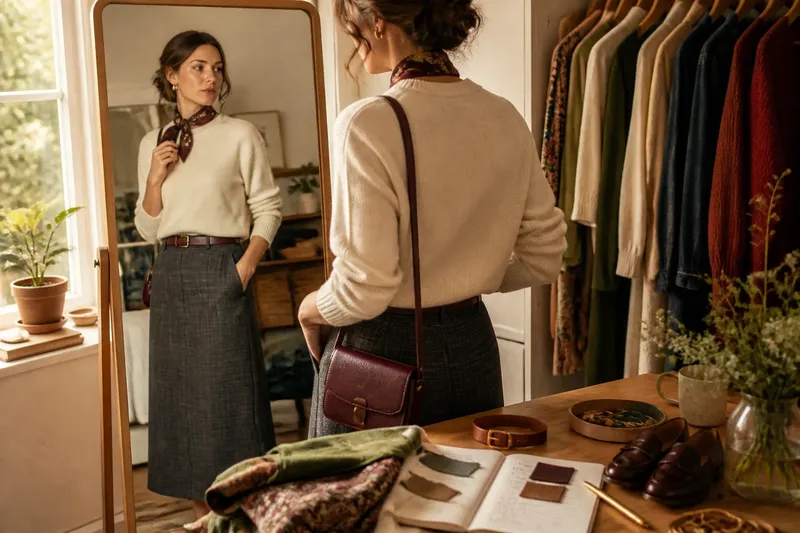
For instance, you might carry deep green from a blouse into a patterned scarf, or repeat the clean lines of a favourite vintage reference in your jacket and bag. The pieces do not need to match exactly. A repeated detail works more like a familiar tune than a uniform: it gives the outfit continuity while leaving room for variation.
Choose a visual direction before adding details
Look at the colour, texture and pattern of the piece you want to anchor the outfit. A fine-knit top can feel relaxed on its own and composed beneath a tailored jacket. A patterned skirt might already set a lively tone, so a plain blouse can give the eye somewhere to rest.
Think about the overall impression rather than trying to coordinate every item. If the anchor piece feels polished, a softer accessory may make it more relaxed. If it feels casual, a crisp shirt or a refined bag can add formality without changing the outfit’s central idea.
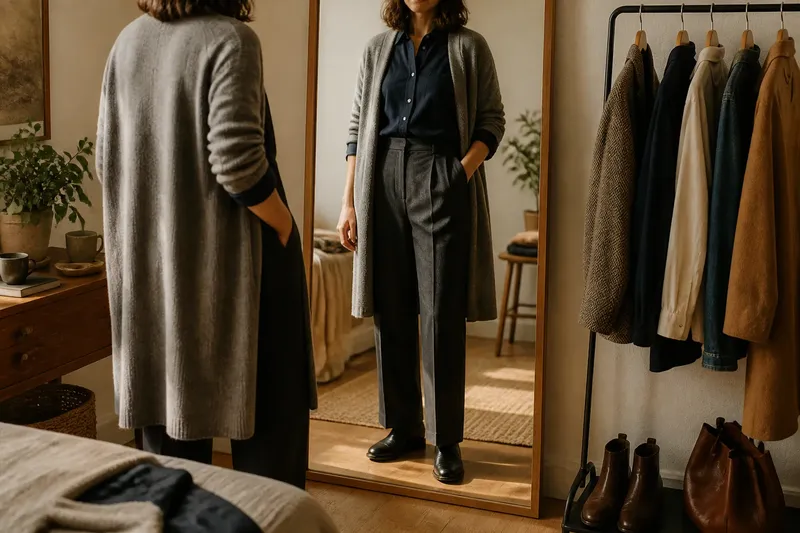
Say you have a charcoal knitted dress, a navy jacket, small silver earrings and a pair of leather loafers. For the morning appointments, wear the jacket and loafers; for dinner, remove the jacket and add the earrings. The visible result is a quieter, less structured outfit in the evening, while the charcoal dress keeps both versions connected.
Let colour and pattern make the transition feel deliberate
When you move between settings, a repeated colour can make different pieces feel as if they belong together. Pick one shade already present in the outfit and echo it in a scarf, bag or small piece of jewellery. If your clothes already include a bold print, keep added patterns simpler so the visual centre stays clear.
Pattern can also express a personal reference without turning the outfit into a costume. A checked jacket might nod to a favourite era; a graphic brooch could bring in a detail you enjoy. Keep the reference to a piece you would happily wear in each setting, and adjust its prominence with a removable layer or accessory.
Use one or two changes to shift the mood
A jacket, scarf, belt, earrings or bag can alter how an outfit reads. Choose a change that is easy to remove, carry or store. If the plan depends on several delicate items or a layer you would have to hold all evening, simplify it.
Try the changes in advance. Wear the outfit as planned for the first setting, then make the intended adjustment and look at the result in a mirror. If taking off the jacket leaves the look feeling unfinished, choose a top or accessory that can hold its own without it.
Imagine you have a navy-and-cream striped top, dark trousers and a soft coral scarf. You plan to wear the scarf for a daytime appointment and remove it for a relaxed meal. If the coral is echoed in your bag lining or earrings, the outfit should still look considered after the scarf comes off; if it is the only point of colour and the result feels stark, keep the scarf on or choose a smaller coral detail instead.
Make the outfit suit the places and the route
Consider what each setting involves rather than relying on labels such as “smart” or “relaxed”. A gallery visit may mean standing and walking, while a family lunch may involve sitting on a low sofa or helping with food. Those activities can affect which clothes feel comfortable and which accessories are practical.
Think about the route between stops, too. If you expect to walk outdoors, choose shoes and a coat that suit the conditions; if you will be indoors for long stretches, make sure removable layers are easy to manage. Check the venue’s guidance or ask your host if the dress code is unclear.
What should you decide before you leave?
Which setting should guide the outfit?
Use the more formal or specific setting as your starting point, then soften the outfit for the other stop with a removable detail. If the dress code is uncertain, ask the host or venue rather than guessing.
How can the outfit feel connected without matching?
Repeat one colour, texture or style reference in two places, such as a shade in both a scarf and a bag. If that feels too coordinated, keep the reference subtle and let the other pieces vary.
What if removing a layer changes the whole look?
Try the outfit both with and without the layer before the day. If the remaining clothes feel incomplete, choose a stronger base or keep the layer on and change a smaller detail instead.
How much should you carry?
Take only the item that solves a clear need, such as a compact umbrella or a small pouch for jewellery. If a planned change has nowhere convenient to go, choose a version that does not require carrying it.
A short rehearsal can settle the choices
Try on the complete outfit, including the coat and bag, at a convenient time. Then make the planned change and check whether the colours and details still feel connected. Decide which version you will wear first and put the relevant accessories together so you are not making rushed choices later.
For a final check, use this list to decide whether the outfit is ready or needs one adjustment:
- Check the dress code for both settings; if the later one is more formal, build around it, but if both are relaxed, choose the version that feels most like you.
- Check that one colour, texture or reference appears in more than one place; if it does, keep the link, but if the pieces feel unrelated, repeat a shade or material in a small accessory.
- Check whether the outfit still feels complete after the planned layer comes off; if it does, keep the change, but if it feels bare, choose a more expressive base or leave the layer on.
- Check the route and expected activities against your shoes; if they suit both settings and the journey, wear them, but if not, choose a more practical pair or plan a manageable change.
- Check whether the planned accessory is easy to remove and store; if it is, include it, but if it will be awkward to carry, leave it out or choose a smaller detail.
- Check the weather and indoor conditions; if a layer or umbrella addresses a likely need, pack it, but if it has no clear purpose, leave it at home.
Getting dressed for two different settings is easier when the outfit carries a detail you recognise as your own and the changes respond to the places you will actually visit. Set aside the accessory or layer you plan to remove, and give it a sensible place in your bag or at the first venue; that small decision can keep the transition calm.